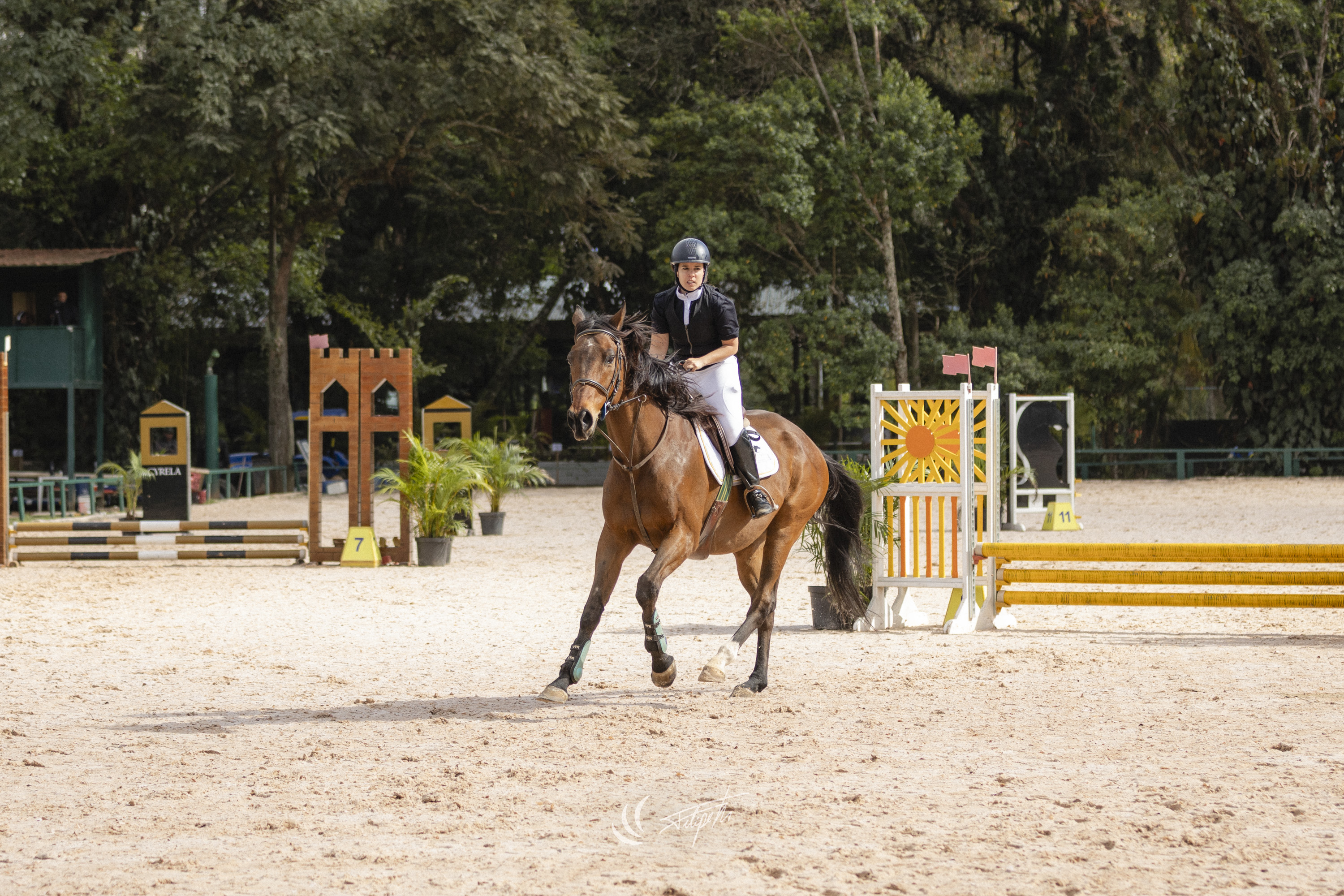

Sports performance · Endocrinology · Equine nutrition
Metabolism and sports nutrition for the world’s most beloved horses
Performance in competition starts with metabolism: endocrine-metabolic evaluation and personalized nutrition help the athletic horse perform more, recover better, and last longer — while, in the same stroke, preventing colic, laminitis, and performance drops with “no explanation.”
Dr. Sofia Cicolo — CRMV-SP 37195
The world’s most beloved horses are cared for by METAHORSE1,000+ horses treated, from hospital emergencies to high-performance athletes
4world-reference hospitals: Cornell, Colorado, Florida, and Saskatchewan
USPdegree, residency in Equine Clinical Medicine and Surgery, and a master’s degree
3 zonesMetabolic Lighthouse Scale: a proprietary methodology to read risk and performance gains
The Context
Why your horse’s endocrine-metabolic health matters — and why now
“That’s overkill. I’ve always fed my horse the way I learned, and it was never a problem.”
If you’ve ever thought that, I understand — and for many years that logic really did make sense. The problem is that the landscape has shifted under our feet. You’re not doing anything wrong: what ends up in the feed trough today simply isn’t the same as it was twenty years ago.
Some horses carry a name, a bloodline, a history — and an expectation that leaves no room for error.
After years studying equine metabolism at Cornell, Colorado, and Florida, I came to understand something generic protocols tend to ignore: every high-performance horse is a unique metabolic equation — and getting that equation right is what separates an animal that merely survives from one that truly performs, year after year.
METAHORSE exists for that level of demand. It isn’t about giving nutrition advice — it’s about following closely, with clinical precision, the horses that deserve a diagnosis worthy of what they represent.
If your horse is irreplaceable, let’s talk.
— Dr. Sofia Cicolo
What changed in your horse’s feed (without you noticing)
Hay is getting more expensive, scarcer, and traveling from farther away — often grown on depleted soil, treated with herbicides and pesticides that didn’t exist when this “traditional” management approach was created.
Alfalfa has practically disappeared from everyday feeding. A myth took hold that it “heats up” the horse — but it used to be used heavily. The real reason behind its abandonment has more to do with price than with the animal’s physiology.
And commercial feed is where the quietest — and most dangerous — change has happened. To cut costs, ingredients unthinkable years ago crept in: protein sources the horse barely absorbs, brewery byproduct, cottonseed hulls, antinutrients, even reject material from biscuit factories. The result is feed loaded with starch and sugar, pushing the horse’s metabolism toward an insulin output its body was never built to sustain — the equine equivalent of ultra-processed food.

And Brazil is still far behind on this
Veterinary practice in Brazil still gives little attention to nutrition as a central path to equine health — the historical focus has always been treating the problem after it appears. It isn’t a lack of goodwill among professionals: equine endocrinology doesn’t even exist as a recognized specialty in the country. In practice, few horse owners here have access to this kind of care.
What’s happening with horses today isn’t an isolated case — it’s a silent epidemic of metabolic imbalances, already documented in several countries. METAHORSE was created to bring this approach here before it comes too late for one more horse.
And this isn’t a standardized spreadsheet, the kind any generic app can spit out. It’s the intersection of years of surgical practice, up-to-date science, and the perspective of someone who is also a rider and lives the daily barn routine. Every case is read individually.
Think back to yourself, ten years ago
You probably didn’t worry about ultra-processed food or glycemic index, and you didn’t think your own endocrine health was essential to your quality of life. Today that has changed — because science has advanced, and because we’ve learned, in practice, the price of ignoring those signals.

It’s the same with your horse. He doesn’t speak, doesn’t choose what he eats, doesn’t decide when it’s time to change. You’re the one who decides.
Don’t wait for your horse to become a statistic of colic, laminitis, or an unexplained performance drop. The first step is understanding where he stands right now — and that starts with a conversation.

Sofia Cicolo — CRMV-SP 37195


Meet Your Veterinarian
Veterinarian, researcher, and equestrian
A graduate of the University of São Paulo (USP), where she also completed her residency in Equine Clinical Medicine and Surgery and a master’s degree with pioneering research on the use of tilapia skin to treat wounds in horses. To stay close to the cutting edge of equine medicine, she trained at four of the field’s top global references: Cornell, Colorado, and Florida (USA) and Saskatchewan (Canada).
She has treated more than 500 horses, from veterinary hospital emergencies to high-performance athletes and major studs, in Brazil and abroad. It was inside the operating room that she noticed a pattern: recurring colic, laminitis, wounds that won’t heal, and performance drops almost always trace back to endocrine and nutritional imbalances ignored over time — and surgery, more often than not, only treats the consequence.
A proprietary methodology, built in practice
The Metabolic Lighthouse Scale isn’t an adaptation of a foreign protocol — it’s a methodology developed by Dr. Sofia Cicolo herself, drawn from years of hands-on care for horses in metabolic crisis. It’s METAHORSE’s exclusive tool for reading risk before it turns into an emergency.
From the operating room to prevention
Most professionals who talk about prevention have never had to operate on the consequences of poor management. It was by handling colic and laminitis cases in critical condition that Sofia identified the pattern that led her to endocrinology — a way of thinking that only develops after years at the surgical table.
Veterinarian and equestrian: theory and practice side by side
“I don’t watch management from the outside — I live the barn routine as a rider myself. Every recommendation is designed from the start to work in the real day-to-day, not just in theory.”
Education
Credentials
Few professionals in Brazil have trained at Cornell, Colorado State, Florida, and Saskatchewan — each contributing a distinct specialty within equine medicine.

University of São Paulo
Degree in Veterinary Medicine, residency in Equine Clinical Medicine and Surgery, and a master’s degree.

Cornell University (USA)
Internship in internationally recognized veterinary cardiology.

Colorado State (USA)
Internship in internationally recognized equine medicine, surgery, internal medicine, and sports medicine.

University of Florida (USA)
Internship in internationally recognized equine internal medicine, surgery, and anesthesia.

Saskatchewan (Canada)
Internship in internationally recognized equine internal medicine and surgery, plus a research project on endocrine disease.
How We Work
Services

In-Person Care
- Endocrine-metabolic evaluation to boost sports performance, longevity, well-being, and health in athletic horses.
- Hormonal metabolic panel testing protocol to support diagnosis and monitoring.
- Personalized feeding and supplementation plans for the horse, with periodic review.
- Metabolic support program for mare and stallion fertility.
- Endocrine-metabolic support for horses in rehabilitation, such as orthopedic injuries and post-colic recovery.
- Metabolic support protocol for chronic and acute laminitis, gastritis, and dysbiosis.
- Other systemic conditions and management of inflammation and equine insulin resistance.
- Prevention, diagnosis, and treatment of PPID.
Remote Advisory
- Remote consulting for fellow veterinarians on specific cases.
- Consulting for studs on genetic improvement programs, targeting gene expression (epigenetics) to reduce immune, growth, and orthopedic failures in foals.
- Consulting for owners seeking prevention and health through personalized nutrition.
- Consulting for equine feed and supplement brands and manufacturers.
How We Work Together
I work alongside the horse’s or property’s full team: attending veterinarian, trainer, farrier, and owners. Services available in Portuguese and English.
Study with Metahorse
Courses & Guides

METAHORSE Nutritional Guide
Learn how to calculate your horse’s weight, assess body condition, and build the right diet — fiber, protein, starch, fat, minerals, water, and salt, explained step by step by Dr. Sofia Cicolo. No more guessing which feed to choose.
R$14.99 upfront (or 4x of R$4.08) · 7-day guarantee

Colic in Practice
The horse’s digestive anatomy, how to tell apart gas, impaction, and spasmodic colic, and the feeding management that reduces colic risk — the leading cause of death in horses.
R$430.00 upfront (or 10x of R$51.68)

Laminitis Zero
A 4-hour training on hoof anatomy, the endocrine, mechanical, and systemic causes of laminitis, an emergency protocol, and nutrition for healthy hooves.
R$1,297.00 upfront (or 12x of R$134.14)

Metabolic Lighthouse Scale Method
A visual methodology with three risk zones (green, yellow, red) to read the horse’s metabolic status and act before a laminitis or colic crisis.
R$149.90 upfront (or 5x of R$33.19)
Frequently Asked Questions
Common Questions
Who is Sofia Cicolo?
A veterinarian trained at USP, with a residency in Equine Clinical Medicine and Surgery, a master’s degree on wound healing in horses, and internships at Cornell, Colorado, Florida, and Saskatchewan. She has treated more than 500 horses and is now a specialist in equine endocrinology and nutrition, with a focus on prevention.
What is MetaHorse?
It’s Dr. Sofia Cicolo’s practice and content hub, dedicated to preventing disease in horses through equine endocrinology and nutrition, offering in-person care, remote advisory services, and practical courses.
What is laminitis in horses, and what are the first signs?
It’s a serious inflammation of the hoof laminae that can cause rotation or sinking of the coffin bone. Early signs include reluctance to move and a locked stance in the front legs. The most common causes are endocrine, mechanical (overload), or systemic (sepsis).
What are the most common causes of colic in horses?
Colic is the leading cause of death in horses and usually stems from feeding management mistakes: incorrect meal splitting, inadequate hydration, and feeding hay and grain in the wrong order. The most common types are impaction, gas, and spasmodic colic.
How do I know if my horse has a metabolic or endocrine problem?
Silent signs such as regional fat deposits (a cresty neck), performance decline, and behavior changes usually precede a crisis. The Metabolic Lighthouse Scale classifies the horse into a green, yellow, or red zone so you can act before the damage becomes irreversible.
Does MetaHorse offer in-person care, or only remote?
Both: in-person care with endocrine monitoring, diet adjustments, feed and supplement brand guidance, hormonal testing, plus remote advisory services for owners and veterinarians. Services available in Portuguese and English.
How do I schedule a consultation with MetaHorse?
Via Instagram @veterinaria_sofia_cicolo, WhatsApp, or email at metahorsevet@gmail.com.
Contact
Let’s Take Care of Your Horse Together
In-person care, remote advisory services, and practical courses on equine prevention. In Portuguese and English.